The thesis
Technology is not a cost to be managed down. It is capital to be allocated with discipline.
Most organizations make technology decisions reactively, tool by tool, vendor by vendor, project by project. The companies that compound allocate technology spend the way they allocate any capital: against a thesis, with a return in mind, and under governance that holds. JMA exists to bring that discipline to executive teams and boards. We are paid by our clients, never by the vendors whose tools we may recommend.
Why JMA
Most firms advising on technology are paid, in part, by the technology.
We are not. That single fact, paired with judgment earned in the operator's chair, is what separates JMA from the firms you are comparing us to.
The advice is the business case, not a vendor relationship.
We hold no resale agreements, earn no commissions on the tools we recommend, and take no referral fees. Larger firms and managed providers carry vendor partnerships that quietly shape their advice. Ours has nothing behind it but your interest.
Led by a three-time CIO, not career consultants.
Harrison Lewis ran technology, operations, and supply chain inside HEB, Kroger, and Lowe's, and served three times as a chief information officer. The judgment behind our work was earned making these calls and living with the consequences.
The people who win the work do the work.
Principals own the strategy, design, and oversight of every engagement. You are not handed to a junior team after the pitch, and you do not pay senior rates for junior hours.
Technology judged like any other investment.
Every recommendation carries a defined return, a governed path to it, and accountability for whether the value is realized. Most technology advice stops at the roadmap. Ours is built to be measured.
We design what happens after go-live.
Most transformation programs define a strategy or implement technology. JMA also defines how the transformed business will operate: the processes, policies, decision rights, controls, SOPs, testing, training, measures, and governance required to sustain the outcome.
Transformation Operability ->Who we're for
Built for the decisions that are too consequential to get wrong.
We work with chief executives, CFOs, and boards at inflection points: decisions where the capital is large, the path is hard to reverse, and the outcome will shape the business for years. The six moments below are what that looks like in practice; if one is in front of you, we should talk.
-
When a major platform or ERP decision is on the table.
The kind of investment that is hard to reverse and easy to get wrong. We make the case rigorous before the capital is committed.
-
When a transformation has stalled and no one agrees on why.
We find where value is leaking and rebuild the governance that restarts progress.
-
When a vendor selection or renewal carries real money and real lock-in.
We run it as a capital discipline, independent of the vendors, so the terms and the decision serve you.
-
When an acquisition leaves you with two of everything.
We rationalize the combined estate against the business outcomes, not the org chart.
-
When the question is where AI belongs, and where it does not.
We separate durable advantage from expensive distraction, with governance and accountability built in.
-
When the technology budget keeps growing and the value does not.
We find what is earning its keep, and what to retire, renegotiate, or consolidate.
Our roots run deepest in retail, grocery, consumer products, and distribution, the sectors where our principals have run the operation and carried the numbers. The discipline travels to any industry; the pattern recognition is sharpest there.
How we work
We hold ourselves to a different standard than traditional consulting firms.
Five commitments define every engagement.
Confidentiality is non-negotiable.
For engagements to succeed, clients must share strengths, weaknesses, and aspirations openly. That candor is only possible when trust is absolute. We do not publish a client logo wall. References are available on request.
We never ask the same question twice.
Knowledge from every engagement is captured in The JMA Ledger and carried forward, so the relationship compounds rather than restarts. The work you do with us today does not have to be done again tomorrow.
Built for you, not for a template.
Every engagement is shaped to the client's business, leadership, and the decisions in front of them. The method holds; the application is built for you.
We are invested in the outcome, not the deliverable.
Strategy without execution is theater. We define what success looks like with our clients, establish how it will be measured, and stay through implementation. The engagement ends when the outcome is delivered, not when the deck is presented.
Built to leave capability behind, not dependency.
The practices, the governance, and the discipline stay with your organization after the work ends. We work to make the next decision yours to make, with the muscle to make it well, long after JMA is gone.
What we do
Every engagement works down a single chain.
The outcome defines the business capabilities, the business capabilities define the technology capabilities, and only then does the technology itself come into view. The discipline is in working top-down rather than starting from the technology.
Outcomes
The work begins with the outcome the executive team is trying to achieve. Revenue, cost, risk, resilience, or the strategic shift the business is making. We name it in business terms and define how success will be measured before any other decision is made.
Business capabilities
Every outcome depends on the business being able to do certain things, sell in a new channel, serve a new segment, close the books faster, respond to a shock. A capability is more than software. It is the process that runs it, the people who own it, the data that feeds it, the decisions it enables, and the readiness of the organization to operate it. We identify the capabilities the outcome requires, assess each one honestly across all of those dimensions, and name where the business must strengthen.
Technology capabilities
Each business capability depends on the technology environment being able to do certain things, capture, integrate, decide, secure, govern, operate, and sustain. We define those technology capabilities against the business need, not against a vendor's product map.
Technology
Only at this point do we choose technology, and we mean technology broadly: software and hardware, the services and support that surround them, whether they live inside the enterprise or are delivered from outside. With the prior work in hand, the selection question is sharper, the criteria are real, and the recommendation is independent.
We evaluate every technology decision against two disciplines: the total cost of owning it, not the price of acquiring it, license and hardware, integration and implementation, operations and support, training and change, and eventual replacement, and the benefits it must deliver, defined in business terms at the start of the work and tracked until they are realized.
The technology serves the capability; the capability serves the outcome.
Where the chain ends, we deliver. We build where the work differentiates the client, and integrate with proven technology everywhere else.
Choosing and building the technology is not the end of the chain. Transformation Operability defines how the business will run, test, adopt, measure, and govern the future state.
Two disciplines we bring across the chain.
Both can sit inside a larger engagement or stand on their own.
Strategic sourcing & RFP execution
Vendor selection and contracting run as a capital discipline: rigorous criteria, structured negotiation, and contracting that aligns price, performance, and exit from day one. We are paid by our clients alone and hold no resale agreements with the vendors we evaluate.
Software & services optimization
For technology already in place, we evaluate what is earning its keep and what is not. The lens is the same: total cost of ownership against the business outcome it serves, with a plan to retire, renegotiate, or consolidate what is leaking value.
The DAAEG™ Framework
Treat technology like capital, not cost.
Most organizations make technology decisions reactively. DAAEG brings the discipline of capital allocation to every technology investment, across five stages.

Define
Establish strategic intent before investing.
Assess
Audit current state, waste, and risk.
Align
Map initiatives to business outcomes.
Execute
Deliver with measurable discipline.
Govern
Realize the benefits, sustain value, close the loop.
AI strategy, done responsibly
We help you prepare for AI, embed it in our recommendations, and practice what we preach.
AI is reshaping how organizations operate, compete, and allocate capital. We help executive teams cut through the noise, separating durable advantage from expensive distraction. Our work covers three fronts.
Prepare
Our AI Awareness and Change Management Program builds the foundation most organizations skip. Through facilitated sessions and our proprietary Awareness Check methodology, we address the people problem before the technology problem, including AI Backwash™, the unintended exposure of company data through everyday AI use.
Embed
Where AI genuinely improves outcomes, we build it into our recommendations and roadmaps. Every AI recommendation is grounded in a business case, a governance plan, and a measurable outcome, not buzzwords.
Practice
We use AI inside our own practice every day, always with a human in the loop. The JMA Ledger, our governed knowledge system, is AI-augmented and senior-supervised. We do not recommend an approach to AI we have not pressure-tested on ourselves first.
On a recent transformation, we used the same discipline to turn business requirements into six interconnected working applications that business leaders could use to experience the future state, surface gaps, and discover possibilities they had not known to ask for, before production capital was committed.
Our AI systems are built by Kushal Raju, Lead Data Scientist (AI/ML), who develops the firm's AI and data platforms, including The JMA Ledger, and sets the technical standards our delivery teams build to. Learn about our AI Awareness Program → See practice in action →
The principals
Senior judgment from both sides of the capital equation.
Every JMA engagement is led by principal and senior consultants who own the strategy, design, and oversight of your work.
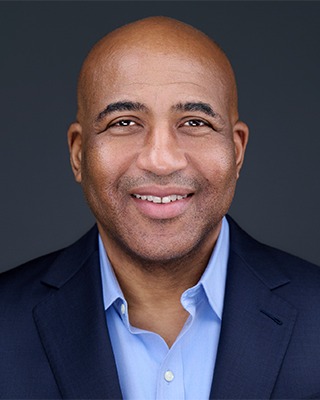
Harrison Lewis
Before founding JMA, Harrison is a three-time CIO with more than 30 years inside HEB, Kroger, and Lowe's, running operations, supply chain, pricing, and e-commerce, including as CIO of Haggen Food & Pharmacy and Northgate González Market. He brings the perspective of someone who has sat in the chair, made the calls, and lived with the consequences.
LinkedIn →
Ashwani Kumar
Ashwani leads how JMA's strategy gets executed. An enterprise architect with more than twenty years delivering large transformation programs, he works directly with CXOs across retail, healthcare, and financial services on programs judged by operational efficiency, compliance, and revenue, not by implementation milestones.
LinkedIn →Additional senior consultants join engagements where the work calls for their depth.
How an engagement begins
Three ways to start, each with senior ownership from day one.
However we begin, the first work is the same. We define the outcome and how it will be measured before any other decision is made.
Start with an assessment.
A defined, time-boxed read on where technology is creating value and where it is leaking, with a clear set of recommendations. The lowest-commitment way to see how we work.
A focused engagement.
One high-stakes decision owned end to end: a platform selection, a sourcing and negotiation, or a stalled program to restart. Bounded scope, senior accountability.
A full program.
End to end through the DAAEG framework, from defining the outcome to governing the value once it is realized. We stay through implementation.
Featured initiative
Progressive Grocer — an applied study in independent technology strategy.
A standalone microsite presenting how operators in the grocery sector can apply the JMA discipline to platform, sourcing, and program decisions. Built and maintained independently of this site.
Take the first step
Every organization has opportunities to improve performance.
The first step is identifying where technology can deliver measurable business impact. We offer two structured ways to engage: a free Methodology Briefing for leadership teams who want exposure to our thinking, and a Capital Allocation Diagnostic for executives ready to apply our discipline to a specific decision.